Published on: December 3, 2025 at 4:10 pm
As AI continues to transform most industries, from education, scientific research and development, and professional services to manufacturing, media, healthcare, and financial services, professionals will differentiate themselves in 2026 and beyond not through technical skills but rather through critical soft skills, according to Academy of Management Scholar Christopher Myers of Johns Hopkins Carey Business School. The latter include communication, teamwork/collaboration, adaptability, problem-solving, critical thinking, time management/task prioritization, and emotional intelligence.
“I think 2026 will continue to bring rapid developments in how knowledge-intensive industries incorporate AI into their work and organizational structures,” Myers said.
“This will require leaders to continue to wrestle with the nature of human-AI collaboration, determine what aspects of work can be AI-enabled and what aspects are either unaffected, or even made more human-intensive, by the introduction of AI,” he said.
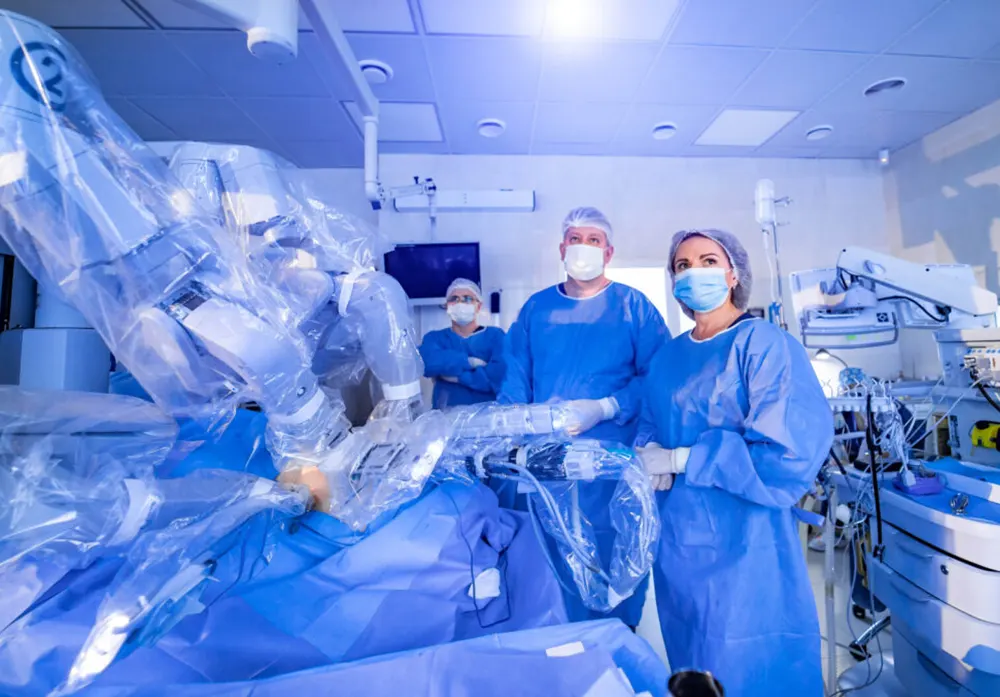
For instance, in healthcare organizations, Myers predicts that AI will continue to aid in clinical decision-making, which will put even more weight on clinicians’ ability to interact and collaborate effectively with others.
Declining performance is often considered to be a central reason why a group of decision-makers—or a single individual such as the CEO—undertake organizational change. However, decision processes in most complex organizations are frequently governed by coalitions or groups (e.g., the CEO, other C-suite executives, and the board of directors) that have competing and conflicting interests.
“No longer will strong clinical knowledge be a substitute for good interpersonal abilities and coordination,” Myers said.
“The clinical knowledge can be ‘back-filled’ by AI-enabled tools to help make better diagnoses and clinical decisions, but the human-to-human collaboration required to implement those decisions will become even more central as a skillset.”